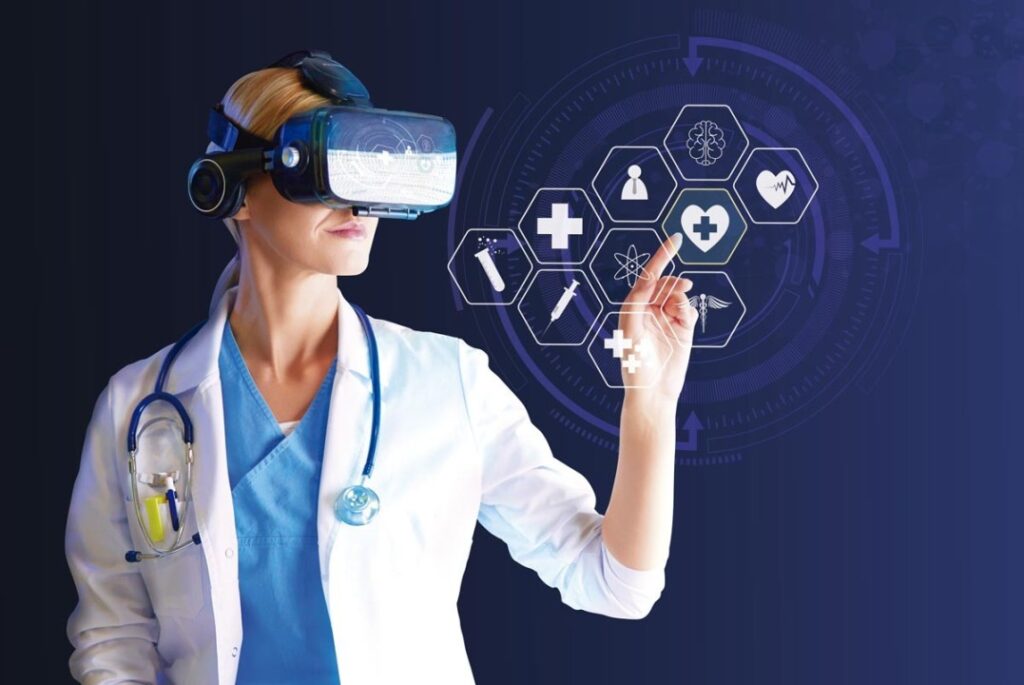

Virtual Reality (VR) is rapidly transforming the way organizations train their workforce across various industries. Immersive VR training systems offers a powerful blend of realism and safety. They allow individuals to learn and practice in environments that closely mimic real-world situations, without exposing them to actual danger or risking damage to expensive equipment. This makes VR an ideal solution for preparing employees for high-risk or complex scenarios that would otherwise be difficult to recreate.
Prime Benefits of Immersive VR Training Systems
What sets VR apart is its immersive nature. Instead of passively reading instructions or watching videos, trainees are placed directly into interactive environments where they can respond, react, and make decisions in real time. The hands-on approach of immersive VR training systems helps them gain practical experience in a controlled setting, building both competence and confidence. They can face challenging situations that may be unsafe in reality, yet essential to understand and master.
Immersive VR training systems has the ability to repeat scenarios as many times as needed. Learners can practice, make mistakes, and refine their skills without real-world consequences. This repetition is crucial for developing muscle memory and improving decision-making under pressure, which is something traditional training methods often struggle to achieve.
By enabling experiential learning, VR goes far beyond what manuals or instructional videos can offer. It creates an engaging environment where employees actively participate in their training, learn from errors, and continuously improve. As a result, organizations benefit from a more skilled, confident, and prepared workforce, ready to handle real-life challenges effectively.
One of the most immediate and impactful advantages of immersive VR training systems lies in its ability to create a completely risk-free environment for learning complex or hazardous tasks. Through immersive simulations, employees can step into lifelike, high-risk scenarios without facing any real-world danger. This makes it possible to practice critical procedures repeatedly in situations that would otherwise be unsafe, costly, or impractical to replicate. Whether it’s handling an emergency situation or navigating a hazardous environment, VR allows learners to experience consequences, correct mistakes, and build confidence—all within a controlled setting. This hands-on, experiential approach is far more effective than traditional learning methods like manuals or videos.
Beyond safety, virtual reality training also offers strong long-term financial benefits. By reducing the need for physical training setups, travel, instructors, and equipment usage, organizations can significantly cut costs. While the initial setup may require investment, VR programs can be reused endlessly across teams and locations, making them highly scalable. This shifts training from a recurring expense to a one-time development cost, enabling companies to train large numbers of employees efficiently while maximizing return on investment. It also eliminates the need to halt operations or take expensive machinery offline for training purposes.
Another key strength of VR training is its ability to deliver consistent and standardized learning experiences. In large or geographically dispersed organizations, maintaining uniform training quality can be challenging. Immersive VR training systems solves this by ensuring that every employee, regardless of location or schedule, receives the exact same content, scenarios, and evaluation criteria. This removes inconsistencies caused by different instructors or training conditions and establishes a uniform skill level across the workforce.